


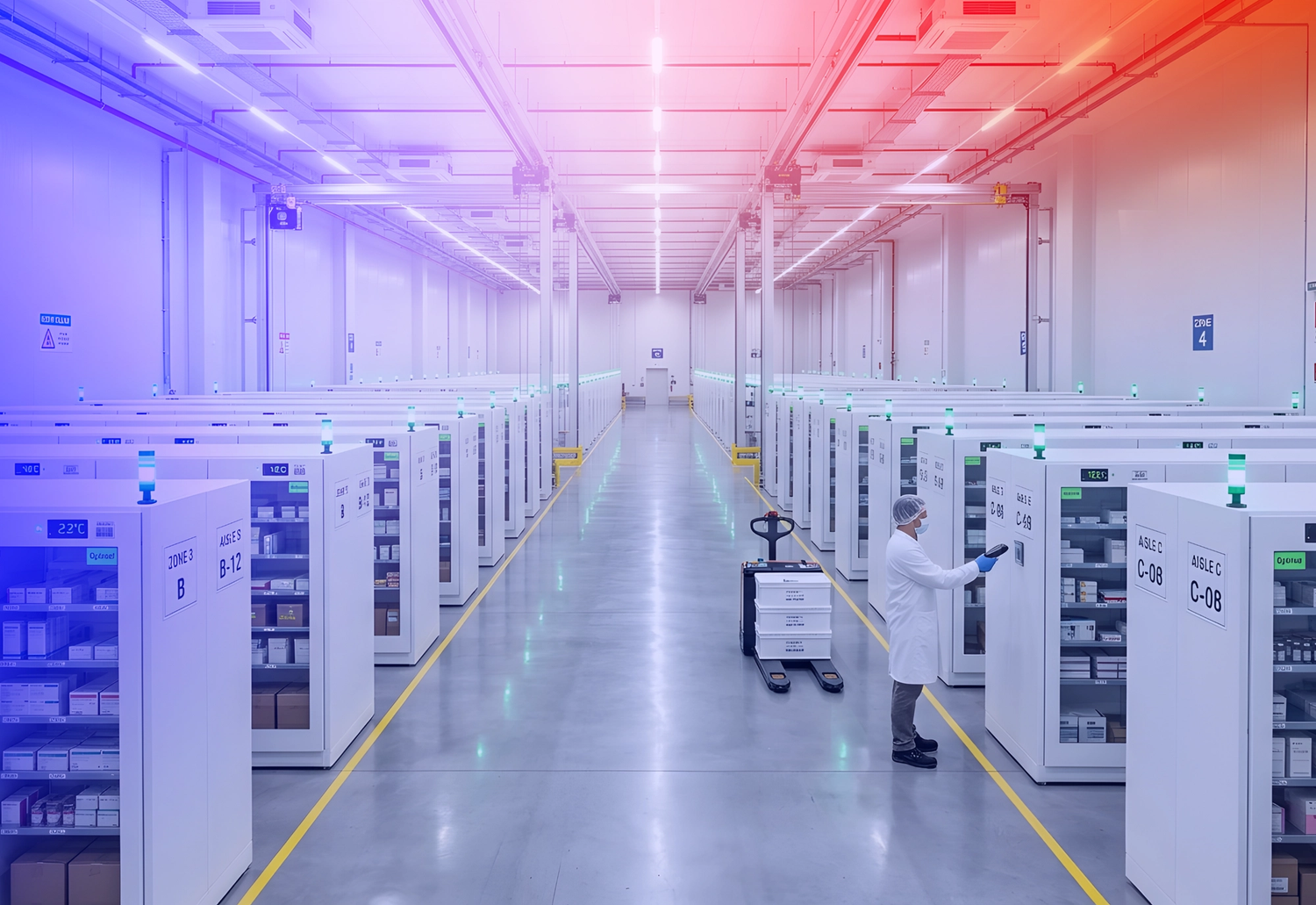
As consumer delivery expectations have shifted from next week to next hour, supply chain logistics have fundamentally changed. With big-box retailers now offering cold-chain pharmaceuticals as part of their delivery options, patient convenience has increased dramatically. This shift, however, brings pharmaceutical-grade handling, security and compliance requirements into fulfillment models originally designed for general merchandise.
Pharmaceutical delivery demands enhanced coordination and heightened security for regulated medications, often across multiple temperature zones. As retailers expand these offerings, the operational complexity of supply chain management increases significantly. Managing cold-chain logistics is far more demanding than handling general merchandise and requires infrastructure, security and handling processes that prevent spoilage, maintain compliance and protect patient safety.
The Complexities of Pharmaceutical Delivery
One of the primary challenges in pharmaceutical logistics is the sheer diversity of inventory. A single order might require consolidating one or two units of a high-value, temperature-sensitive prescription therapy with large-scale units of a common, over-the-counter medicine. Managing these varied pick levels and unifying them into a single, seamless delivery stream is inherently complex.
When retailers bundle these items, the challenges scale rapidly. High-security prescriptions and basic medications must move through the same rapid workflow, ensuring that strict safety and handling protocols for sensitive drugs do not slow the delivery times patients depend on. This synchronization is critical, as delayed access to medication can have serious consequences for patient health.
Further complicating matters, the pharmaceutical cold chain encompasses multiple temperature ranges that must be carefully maintained from fulfillment through final handoff. Even minor lapses in temperature control can spoil products, render medications unusable and expose organizations to regulatory and financial risk.
Speed vs. Stability: Infrastructure and Best Practices
Pharmaceutical retailers require infrastructure that supports both rapid fulfillment and precise temperature control. Automation — particularly robotic product picking — can accelerate order processing while keeping costs in check. However, automation should be applied selectively. A diagnosis-first approach allows organizations to identify specific bottlenecks or risk areas, such as excessive dwell time or handling exposure, and determine where automation will deliver the greatest value.
In pharmaceutical environments, automation decisions must also support risk mitigation. Reducing unnecessary human handling, tightening temperature control and improving process auditability are just as important as improving speed.
As replenishment and last-mile delivery often involve multiple stops, operational workflows must be reengineered to meet pharmaceutical-specific demands. To minimize transit time for temperature-sensitive products, vehicles should be loaded in reverse drop order, ensuring immediate access to the first delivery. For medications with limited stability windows, a last-in, first-out approach is critical. Products should be picked as late as possible and delivered directly to the patient without delay.
The Security Challenge in the Last Mile
High product value and strict regulatory requirements make last-mile security one of the most challenging aspects of pharmaceutical delivery. The final transfer from vehicle to recipient is often the most vulnerable point for chain of custody, security and temperature integrity. In direct-to-consumer models, drivers may handle both general goods and controlled substances, increasing the risk of loss, diversion or temperature excursion.
Mitigating these risks requires both physical safeguards and digital oversight. Dynamic route optimization, real-time monitoring and artificial intelligence-enabled analytics can reduce exposure while controlling delivery costs. Simulation and digital twin technologies allow organizations to model end-to-end network flows, identify potential failure points and stress-test scenarios before disruptions occur in the physical cold chain. These tools help uncover vulnerabilities early, protecting inventory and patient safety.
Maintaining compliance with good distribution practices also requires documented handling procedures, continuous temperature monitoring and clear accountability at every handoff — especially in decentralized, last-mile delivery environments.
Building Precise Supply Chains
Despite ongoing technological advancements, the last mile remains heavily dependent on human execution. Because pharmaceutical delivery is both fast-paced and unforgiving, personnel must receive thorough training, particularly around equipment failure protocols and dwell-time limitations. Even the most advanced technology is only as effective as the people operating it.
As specialty pharmaceuticals, biologics and personalized therapies continue to grow, tolerance for temperature deviation and delivery error will continue to shrink. In this environment, retailers entering pharmaceutical delivery must invest in precise network optimization strategies. A center-of-gravity approach to facility placement — positioning fulfillment locations closer to demand — reduces delivery miles, limits exposure time and lowers overall risk.
Delivering lifesaving medications at speed requires infrastructure that seamlessly integrates automation, security, temperature control and human expertise. Precision is no longer optional. It is foundational to protecting product integrity and patient outcomes.
This article was originally published in Pharmaceutical Commerce on 2 April 2026.
To find out more about our simulation offerings, click here.