


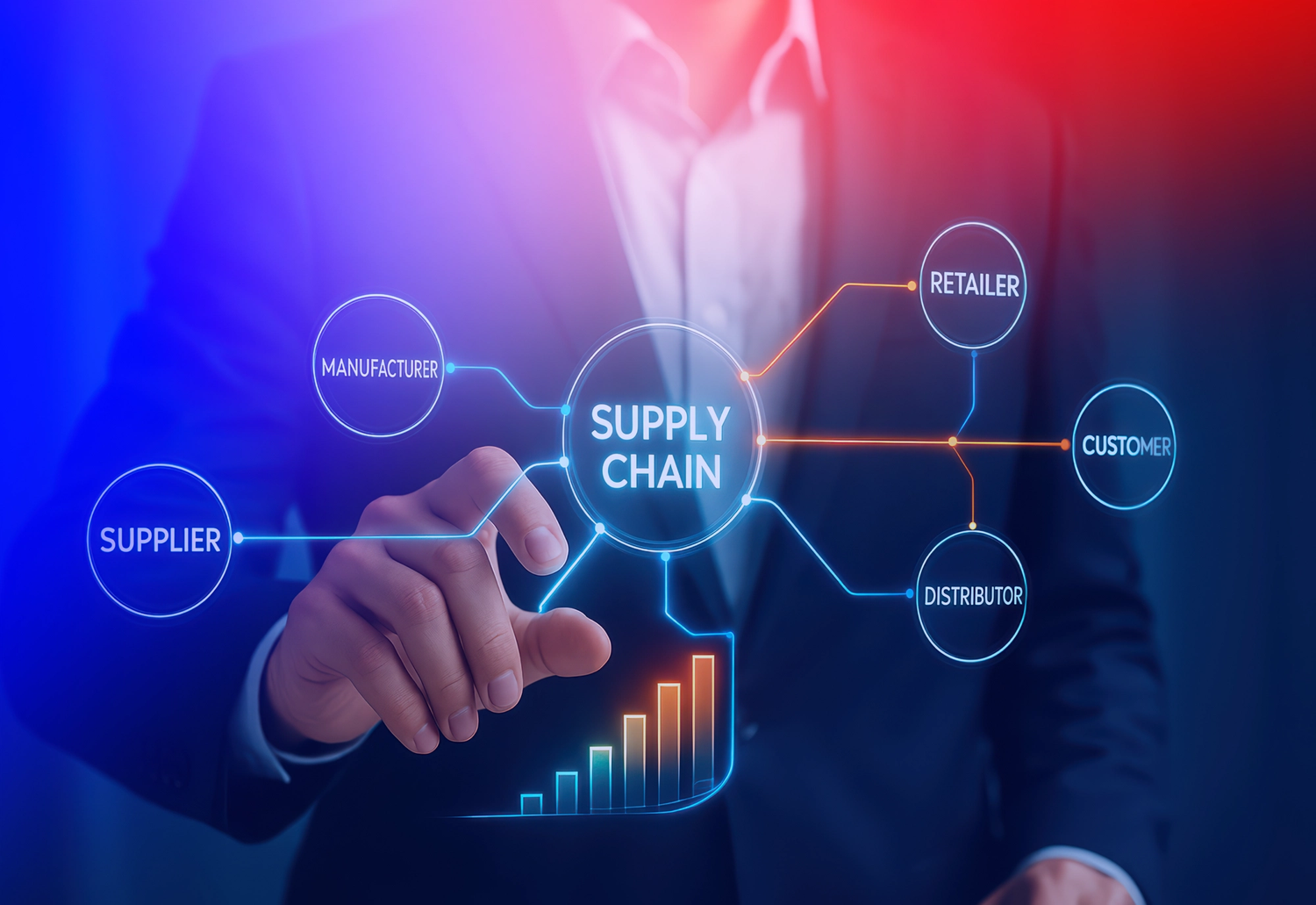
Supply chains were once viewed as a necessary cost of operations. Now, they shape how businesses compete, respond to market shifts, and meet rising customer expectations. The organizations that treat supply chain as strategic are positioning themselves to outperform competitors and orient themselves in a rapidly evolving market.
Customer expectations have raised the stakes
Consumer behavior drives business decisions. In the wake of same day delivery and next day returns, people expect fast service, real-time tracking, and personalized experiences. When these expectations aren't met, they move to a competitor who can deliver. This puts enormous pressure on supply chain infrastructure that wasn't designed for this level of responsiveness.
Companies investing in adaptive supply chain capabilities can respond to changing demand patterns, adjust to market conditions quickly, and position inventory where it's needed before orders arrive. The alternative – reactive scrambling when customer needs shift – has a huge cost beyond lost sales. It erodes brand trust and hands competitive advantage to businesses with more sophisticated supply chain solutions.
Operational infrastructure determines what's possible
The strength of a company's operational infrastructure sets the boundaries for what the business can achieve. Supply chains built for stability struggle when markets require agility. Those designed only for cost efficiency can't cope when disruption hits.
Building resilience requires visibility across the entire network, from suppliers through to final delivery. Predictive analytics help organizations anticipate challenges and position resources accordingly, rather than reacting after problems emerge. Network design that accounts for multiple scenarios creates flexibility to pivot when circumstances change, whether that's shifting trade policies, supplier constraints, or unexpected demand spikes.
Physical infrastructure also matters. Industrial property decisions directly impact capability. Facilities in the wrong locations add transport costs and delivery time, and buildings with insufficient specifications limit automation potential and storage density. Strategic property planning ensures physical infrastructure supports business objectives now, and in the future.
Competitive advantage lives in execution capability
Supply chain performance directly impacts customer acquisition and retention. Fast, reliable delivery creates positive brand associations, while delayed or unreliable fulfillment drives customers elsewhere, often permanently. Companies competing primarily on convenience or speed know the sustainability of their business model depends on supply chain excellence.
Cost control remains important, but the focus has shifted from minimizing individual line items to optimizing total system performance. Sometimes spending more in one area – better facilities, advanced technology, strategic inventory positioning – delivers greater overall value by improving speed, reducing risk, or enabling better customer service.
The strategic integration challenge
Many organizations still treat supply chain planning as separate from broader business strategy. This creates a disconnect where operational capabilities can't support commercial objectives, or where business decisions ignore supply chain realities until problems emerge.
Integration means supply chain leaders participate in strategic planning, not just execute plans handed down. It means investing in technology like simulation, where you can model capabilities and test scenarios before committing resources. It requires understanding how each element – from warehouse design to carrier relationships to inventory policies – connects to business outcomes.
The companies succeeding in today’s markets aren't necessarily the biggest or best-resourced. They're the ones that have aligned supply chain strategy with business priorities, invested in capabilities that matter most to their customers, and built the flexibility to adapt as conditions change. That alignment doesn't happen by chance, it occurs when leaders treat supply chain as a business priority.